
As summer season peaks and Individuals start to trickle again from their European getaways, the social media trip pics are interspersed with movies touting the advantages of European meals over American meals. Generally, these movies make level — meals rules are usually stricter within the European Union, resulting in extra transparency and higher meals high quality.
“The European meals system typically emphasizes conventional, minimally processed meals, and clearer meals labeling rules,” explains Lena Bakovic, MS, RDN, CNSC, a Registered Dietitian Nutritionist. “Europeans additionally are likely to eat extra entire meals, and fewer ultra-processed merchandise.”
However in fact, the European meals system isn’t good both. So how will we separate reality from fiction? Listed here are 4 main variations in the case of the American vs. European meals programs — and two commonly-held myths that don’t maintain up.
A Story of Two Companies
A giant a part of the rationale why there’s such an enormous distinction between European meals vs. American meals comes right down to how meals rules are made. American selections about meals security are largely made by the U.S. Meals and Drug Administration (FDA), which manages each threat evaluation and threat administration.
Within the EU, then again, these two duties are divided: The European Meals Security Authority (EFSA) convenes scientific panels of impartial consultants to make its threat assessments, that are then offered to the European Fee. The Fee considers these information alongside social, political, technological, and financial components earlier than making EU meals rules.
These European strategies are bolstered by legal guidelines mandating the EFSA to re-evaluate all meals components approved to be used earlier than 20091. Within the U.S., there isn’t a such authorized mandate. Consequently, the FDA typically adheres to its historic selections fairly than reassessing new proof — till pressed to take action by client demand, equivalent to by way of petitions or lawsuits.
Need extra well being information delivered to your inbox? Join the e-newsletter for extra well-researched, non-toxic residing steerage and good wellness recommendation.
The Flaws of GRAS Designation
An added variable resulting in an absence of oversight within the U.S. is the “Typically acknowledged as secure” (GRAS) designation. In an effort to fast-track sure substances and components, producers can, in some circumstances, “self-affirm” the GRAS designation by convening their very own knowledgeable panel to overview potential security considerations. In these circumstances, the FDA isn’t required to carry out its personal checks, which might result in biased selections.
In Europe, quite the opposite, strict testing is required earlier than any new substance hits the market. The EU regulation as an entire depends on the precautionary precept when approaching threat administration, which implies that if there are affordable grounds for concern about potential hurt to human well being, proactive measures could be taken to attenuate threat — even when scientific proof shouldn’t be but conclusive2.
General, it’s honest to say that the EU tends to have a extra strong strategy to regulation than the U.S. However to grasp what this implies in apply, let’s take a more in-depth have a look at grocery store cabinets.
4 Main Variations Between the European and American Meals Programs
1. American beef is laced with doubtlessly cancer-causing hormones.
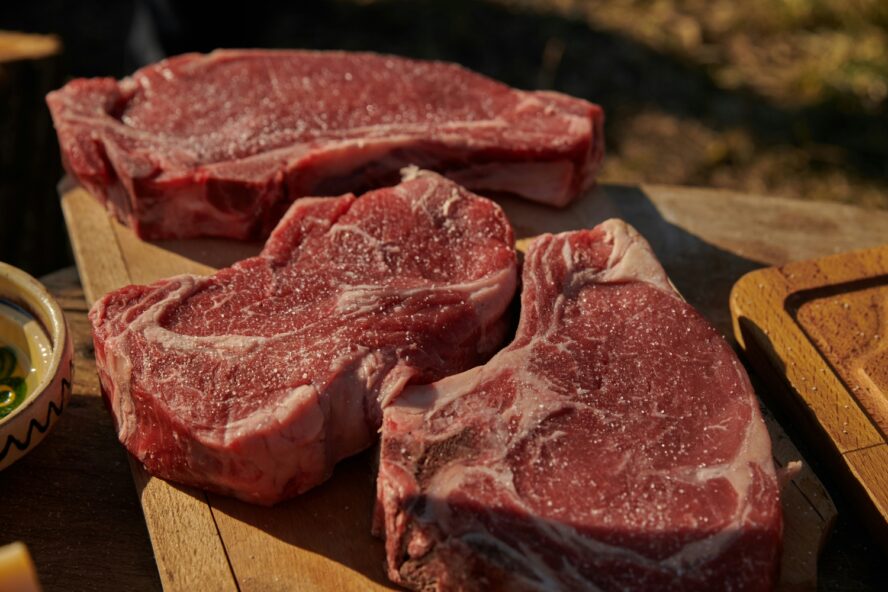
In 1989, the European Communities tried to ban U.S. beef from {the marketplace} as a result of the usage of artificial development hormones like rBGH and rBST3. These hormones have been authorized within the U.S. since 1993, however formally joined the checklist of meals components banned in Europe in 1990. In 1997, the U.S. and Canada took the choice to the WTO Dispute Settlement Physique, which dominated in opposition to Europe, saying there was inadequate proof of the detrimental human well being results of consuming hormone-laced beef.
Recombinant bovine development hormone (rBGH) is a man-made development hormone that was linked in some early research to elevated threat of prostate, breast, colorectal, and different cancers. In accordance with the American Most cancers Society, nonetheless, later research have failed to substantiate these hyperlinks4.
Different hormones used within the elevating of beef cattle within the U.S. embrace estradiol-17β, progesterone, testosterone, zeranol, trenbolone, and melengestrol acetate. In Europe, these hormones had been banned in 20035.
“There are important disagreements between the EU and the US on the well being problems with hormone handled beef,” Professor Man Poppy, PVC Analysis and Innovation, College of Bristol, instructed Science Media Centre6. “While the EU claims that one of many repeatedly used hormones is carcinogenic, the US and Canada declare to the WTO that the EU threat evaluation is flawed. And several other of the hormones used don’t have any well being claims in opposition to them.”
“Present scientific proof within the US signifies that consuming beef or dairy merchandise from cattle handled with artificial development hormones is not typically related to well being dangers,” provides Bakovic. “The analysis does, nonetheless, proceed…fortunately. Right this moment greater than ever, people are selecting conventional and minimally processed entire meals with out added substances equivalent to development hormones.”
Hormones are additionally related to animal welfare considerations.
It’s additionally vital to contemplate that if these hormones stay banned within the EU, it’s not simply right down to elevated threat of most cancers.
“The bans are partly rooted in well being considerations,” says Dr. Elisa Pineda, Analysis Fellow in Dietary Epidemiology and Meals Coverage on the George Institute for World Well being UK, Imperial Faculty London6, “but additionally replicate moral and client choice requirements that prioritize transparency and animal welfare.”
“The rearing apply which is concerned in accelerating development could be seen as an animal welfare problem,” provides Poppy, “as weight acquire and the feedlots and different practices to scale back feed necessities and speed up development end in a lot decrease animal welfare than rearing programs not involving hormones or feedlots.”
2. American rooster is rinsed in chlorine bleach.
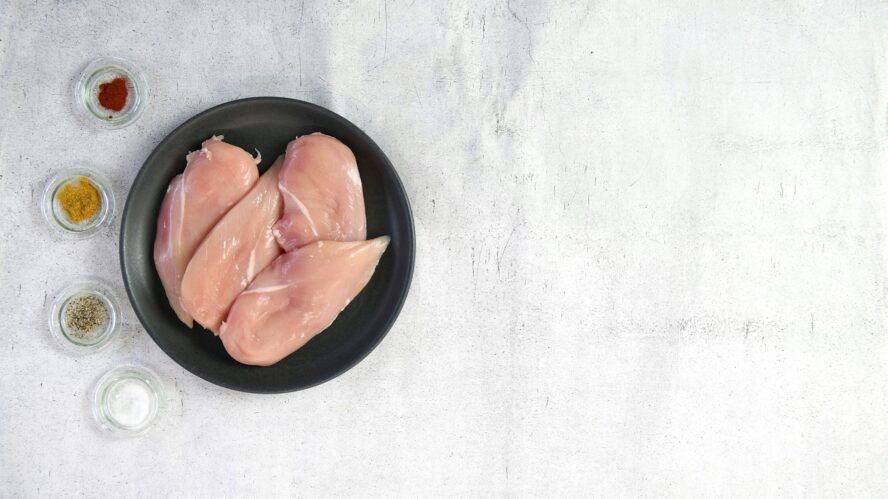
Within the U.S., chlorinating has lengthy been a preferred technique of treating rooster to scale back the presence of dangerous micro organism like salmonella and campylobacter. In distinction, this apply has really been banned within the EU since 1997 — however not for any direct well being dangers. In reality, based on the EFSA, “chemical substances in poultry are unlikely to pose a right away or acute well being threat for customers.”
The problem right here isn’t linked particularly to the chlorinated rooster however to the underlying manufacturing unit farming practices which have led to its reputation. “European regulators are seeing the antimicrobial washes as a band-aid to cowl up what’s actually an absence of ample hygiene,” Sarah Sorscher, director of regulatory affairs on the Heart for Science within the Public Curiosity, a client advocacy group, instructed NPR7.
“An analogy goes out for a stroll and seeing a pile of canine muck,” Paul Wigley, Professor in Animal Microbial Ecosystems on the College of Bristol, instructed Science Media Centre6. “The UK/EU strategy is to keep away from getting it in your sneakers. The American strategy is [to wipe] it off while you get dwelling — however everyone knows that some will stay trapped within the tread.”
The EU cites information that an built-in strategy to meals security is greater than enough to scale back the prevalence of Salmonella. NPR studies that when such built-in practices had been carried out within the EU within the early 2000s, cases of Salmonella dropped by practically 50% over 5 years7.
Today, solely about 5 p.c of the processing vegetation within the U.S. really use chlorine washes, based on figures from the US Nationwide Hen Council8. The rooster from these vegetation is usually the most cost effective in the marketplace, that means these most affected by this course of are sometimes low-income Individuals.
“Inexpensive rooster generally is a nutritious protein selection,” says Bakovic, “nonetheless, the decrease costs are typically related to sure farming practices which can embrace the usage of antibiotics or chlorination.”
3. American meals include extra added sugars than European meals.

Whereas the Dietary Tips for Individuals advocate that lower than 10% of whole day by day energy come from added sugars, the truth of American sugar consumption is sort of completely different. Individuals eat a median of 13% of their day by day energy from added sugars, based on a 2023 examine in Vitamins9. The prevalence of diets with excessive added sugars is even greater amongst 31 to 50-year-olds, one-third of whom eat greater than 15% of their day by day energy in added sugars.
This stems largely from the prevalence of sugar within the American meals system, the place all the pieces from grocery store bread to yogurt comprises added sugars. Extremely-processed meals particularly are packed to the brim with sugar (and will even be detrimental to your mind well being).
A 2016 examine in BMJ Open discovered that ultra-processed meals comprised 57.9% of caloric consumption for the practically 10,000 contributors surveyed in a Nationwide Well being and Vitamin Examination Survey9. Given the truth that ultra-processed meals’ added sugar content material is about 21% of their caloric load, this consumption contributed to a whopping 89.7% enhance in power consumption from added sugars.
In the meantime, in Europe, added sugar consumption is a bit decrease — solely about 7 to 11% of whole consumption for adults, based on a 2017 examine in Vitamin Journal10. Notably, these sugars primarily come from sweetened drinks (the place you’d count on them to be!) fairly than savory meals like breads and sauces.
Excessive-fructose corn syrup is an enormous offender.
The standard of sugar issues, too, based on Bakovic. “American processed meals positively typically include greater ranges of added sugars, which embrace high-fructose corn syrup (HFCS),” she explains. “Excessive consumption of HFCS and different added sugars is most unquestionably correlated with continual illnesses and elevated threat of weight problems, insulin resistance, and diabetes.”
In Europe, long-standing quotas on HFCS imply that it’s a far much less frequent additive. In reality, till these quotas had been lifted in 2017, HFCS represented solely about 4% of the sugar market. Today, nonetheless, European HFCS use is on the rise, which can contribute to elevated well being points over time.
This context is vital for understanding the total image of well being in America vs. Europe. 2020 information highlighted a 17% weight problems charge in France, in comparison with a 40.3% charge amongst Individuals in the newest CDC information from 202311. Nonetheless, the CDC information represented the primary time in over a decade that the American weight problems charge didn’t enhance. In France, then again, weight problems charges have been climbing, with a 11.3% weight problems charge in 200412.
4. The bread in Europe is simpler to digest than the bread in America.
Just lately, influencers have taken to social media to assert that the bread in Europe is simpler to digest than within the U.S. — and there are just a few the reason why this really checks out.
The primary consider evaluating European bread vs. American bread comes right down to essentially the most prevalent wheat sorts on both aspect of the Atlantic. Brett Carver, an knowledgeable on wheat genetics at Oklahoma State College, tells the New York Occasions that we are likely to depend on tougher, higher-gluten wheats within the U.S13. In Europe, softer, lower-gluten wheats are extra frequent, which could be simpler to digest for these with a gentle gluten intolerance.

“Wheat grown within the U.S. [tends to be] greater in gluten, whereas there are a number of extra forms of wheat grown in Europe which are decrease in gluten. So they might not trigger points in those that are gluten-sensitive,” Melissa Groves Azzaro, RDN, LD, instructed GoodRx Well being14.
Bread in Europe additionally tends to be made with a sourdough starter and fermented for a number of hours and even days, which makes difficult-to-digest carbohydrates simpler on the intestine. Add a decrease chance of each added sugars and carcinogenic contaminants just like the herbicide glyphosate (which is forbidden to be used as a desiccant within the EU15), and it’s no marvel the bread in Europe is so significantly better.
It nonetheless is determined by the specifics of the bread you purchase.
That stated, don’t be tempted to overgeneralize: The standard of European bread isn’t all the time a given. In France, for instance, an atypical baguette is leavened with yeast and solely fermented for 3 to 4 hours, and components are permitted to enhance style and texture16. You’ll must splurge for a baguette de custom for an additive-free loaf that’s been fermented for 15 to twenty hours.
In the meantime, it’s true that almost all grocery store loaves are riddled with components within the U.S. — however the vary of nice sourdough bakeries turning out loaves that may rival even these in Europe is on the rise.
Myths Concerning the Variations Between European and American Meals
Delusion #1: The U.S. permits far more synthetic substances and dyes than Europe.
Whereas traditionally, the U.S. has certainly permitted much more synthetic substances and dyes than the EU, latest modifications imply the variations right here aren’t as hanging as they as soon as had been. Identified carcinogen Pink 3 was lastly banned within the U.S. this January, simply six months after we lastly eradicated brominated vegetable oil in July 2024.
The EU definitely has a leg up on the U.S. in some regards, with bans on components like potassium bromate, a possible carcinogen utilized in some U.S. flours however banned within the EU since 1990. However on the planet of synthetic dyes, the EU hasn’t really banned many greater than the U.S.

Whereas Blue 1 was beforehand banned in Europe, it was re-evaluated and authorized as secure in 201017. And Pink 40, Yellow 6, and Yellow 5, all of which have been banned in California public faculties since 2024, are nonetheless allowed in Europe, although their use is closely regulated and requires a warning label stating that the dyes can have an effect on consideration in youngsters18.
Plus, regardless of what we’d suppose, Europe has not banned glyphosate outright, opting to increase its authorization to 2033. And the U.S. continues to make strides, with the FDA setting a purpose to take away six petroleum-based meals colorings from the American meals system by 2026.
Delusion #2: Individuals eat far more GMOs than Europeans.
It’s true that the American meals market depends closely on genetically modified crops. Greater than 90% of American corn and soy is grown utilizing GMO seeds19, nearly all of which have been genetically modified to face up to ample spraying with glyphosate.
In Europe, GMOs are extra closely regulated, with a authorized framework constructed round a four-pronged mission — with the purpose of defending each human and animal well being in addition to the setting20.
That stated, there’s a serious loophole on this coverage: The EU might not develop as many GMOs because the U.S., but it surely has nonetheless approved the importation of a number of genetically modified crops, together with 26 forms of maize, mainly for animal feed. And after a protracted impasse, it approved the import of three extra corn varieties for each animal feed and human meals in April of this 12 months21.
So whereas the European Union does certainly have strict insurance policies for labeling GMOs, they’re positively on the market and rising extra prevalent every single day. In brief, it’s not all excellent news on the opposite aspect of the pond; neither is all of it dangerous information on our aspect — the perfect we will hope for is progress throughout.
Learn Extra on Natural Authority
Sources:
- https://meals.ec.europa.eu/food-safety/food-improvement-agents/components/re-evaluation_en
- https://datafisher.com/information/is-the-european-efsa-really-better-than-the-american-fda/
- https://pmc.ncbi.nlm.nih.gov/articles/PMC1083852/
- https://www.most cancers.org/most cancers/risk-prevention/chemical compounds/recombinant-bovine-growth-hormone.html
- https://www.congress.gov/crs-product/R40449
- https://www.sciencemediacentre.org/expert-reaction-to-the-debate-on-hormone-treated-beef-and-chlorinated-chicken/
- https://www.npr.org/sections/shots-health-news/2025/04/15/nx-s1-5364940/chlorinated-chicken-trump-tariffs-uk-eu
- https://pmc.ncbi.nlm.nih.gov/articles/PMC4785287/
- https://pmc.ncbi.nlm.nih.gov/articles/PMC9867287/
- https://pmc.ncbi.nlm.nih.gov/articles/PMC5251321/
- https://www.cdc.gov/nchs/merchandise/databriefs/db508.htm
- https://pmc.ncbi.nlm.nih.gov/articles/PMC9918095/
- https://www.nytimes.com/2025/07/24/properly/eat/health-effects-bread-europe-united-states.html
- https://www.goodrx.com/well-being/diet-nutrition/gluten-europe-vs-united-states?srsltid=AfmBOoqX9BQM3NZyl1cEBxPxqBcWzP4AChBGoFtH7b1tmWy1FhqmqyZ8
- https://meals.ec.europa.eu/vegetation/pesticides/approval-active-substances-safeners-and-synergists/renewal-approval/glyphosate_en
- https://boulangerie-laportedupain.fr/quelle-est-la-difference-entre-un-pain-ordinaire-et-un-pain-de-tradition
- https://www.efsa.europa.eu/en/efsajournal/pub/1853
- https://www.ewg.org/news-insights/news-release/2024/09/california-leads-nation-first-ban-six-harmful-food-dyes-school
- https://www.ers.usda.gov/data-products/adoption-of-genetically-engineered-crops-in-the-united-states/recent-trends-in-ge-adoption
- https://meals.ec.europa.eu/vegetation/genetically-modified-organisms/gmo-legislation_en
- https://www.feedbusinessmea.com/2025/04/16/eu-approves-three-gmo-corn-varieties-for-feed-food-use/
