It’s a easy ingredient with a flowery title: oleo saccharum. Which means “sugar oil” in Latin, oleo saccharum is the results of putting citrus peels in sugar to drag out their important oils. The approach produces a flavored sugar or syrup to make use of in cocktails.
Approach again within the 1600s, 1700s, and 1800s, oleo saccharum was thought-about an important ingredient in punch. The current rediscovery and renaissance of oleo could be credited to David Wondrich in his e book “Punch.” Within the e book, Wondrich writes concerning the historical past of oleo and consists of many recipes just like the Endeavor Punch that requires lemon oleo saccharum together with rum, Madeira, and citrus juices.
As Victorian-era punch fell out of vogue in favor of single-sized servings of cocktails like slings and juleps, oleo additionally fell by the wayside. Now it’s again, and you’ll consider oleo as an old-timey ingredient or as a sensible new-to-you approach that can be utilized with a watch towards sustainability: Extra on that in a second.
Within the early days of punch, sugar got here in exhausting clumps or loaves that bartenders needed to break up and infrequently make clear themselves. In keeping with Wondrich’s oleo saccharum entry in “The Oxford Companion to Spirits and Cocktails,” in olden days drink makers would rub the surface of citrus fruits on the exhausting sugar loaves. This carried out double obligation of extracting the citrus oils and liquifying among the sugar. As of late there’s no want for that.
Making Oleo Saccharum
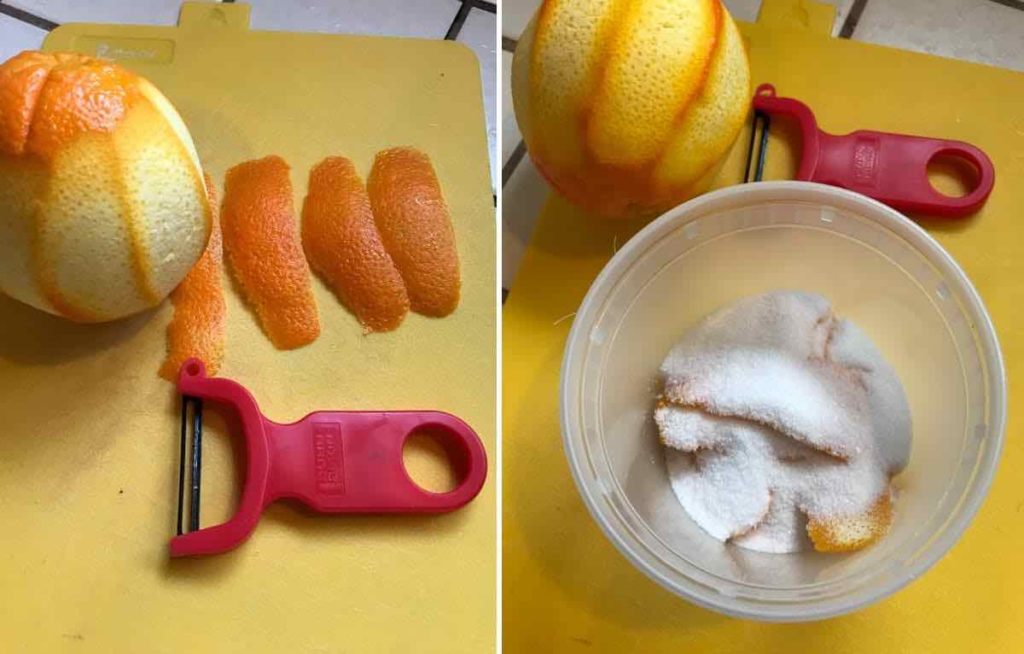
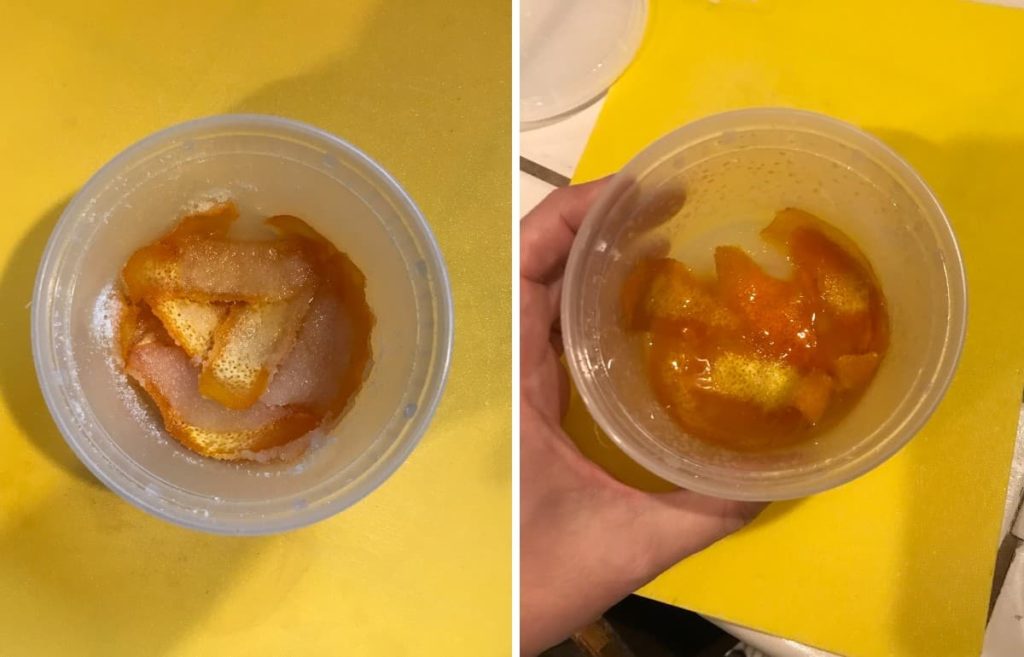
Merely peel a citrus fruit and canopy the peels with sugar in a bowl or different container. Inside a couple of hours the sugar will pull the oils out of the peels and the sugar will flip to liquid. If you happen to use a small quantity of sugar you’ll have a concentrated oily syrup (be at liberty to dilute it after). If you happen to use quite a lot of sugar relative to the amount of peels, you’ll get a flavored sugar. Most bartenders go away the peels within the sugar in a single day in a sealed container or in a vacuum bag, equivalent to is used for sous vide cooking. You possibly can even use a resealable bag like a Ziplock. (In a pinch, a quicker approach of creating oleo is to easily muddle citrus peels with sugar, however it’s extra enjoyable to let it occur naturally.)
If you happen to’re not utilizing the ready oleo saccharum for a couple of days, pressure or pull out the citrus peels, wiping off the liquid oils clinging to them again into the sugar, and retailer the peels individually. You may get one other use out of the citrus peels by candying them, which we’ll get into under.
How you can Use Oleo Saccharum
Oranges, grapefruits, lemons, and to a lesser extent limes (more durable to peel; could be bitter) could be was oleo saccharum. The simplest approach to make use of the oleo is as you’d use an unflavored sugar, or as a easy syrup by including an equal quantity of water to the oleo. Use lemon oleo in a turbo-charged lemonade, orange oleo in your Outdated Long-established, or lime oleo in a scrumptious Ti’ Punch. Or use oleo so as to add a brand new taste to a normal cocktail, like a grapefruit-tinged Daiquiri or an orange Whiskey Bitter.
Oleo Saccharum and Sustainability
In case your drink recipe requires citrus juice and/or a single peel as a garnish, you may simply make use of the remainder of the fruit that may go to waste. Peel the citrus first, then toss the peels you don’t want with sugar to make oleo saccharum.
{Many professional} bartenders use the oleo saccharum approach to get further life out of partially-used citrus, equivalent to lemon slices or peels that have been minimize for garnishes however not utilized by the tip of the evening on the bar. They merely muddle or in any other case beat up these items of citrus with sugar and go away them in a container in a single day for the particular person on the morning shift to filter. Word that citrus peels must be peeled, scraped, poked, or in any other case crushed up a bit in order that the oils could be pulled out into the sugar. Utilizing still-unpeeled citrus sadly doesn’t work. (An instance of a recipe with “citrus scrap syrup” is the Golden Torch, a tequila drink from New York’s Cote, wherein the bartenders macerate leftover lemon and orange peels with sugar.)
After making your flavored sugar or syrup oleo, you’re left with flabby, moist, sticky citrus peels that may not spray oils atop cocktails in garnishes, however fortunately there’s a approach to make additional use of them. Merely place them in a meals dehydrator or within the oven on a cooking sheet set on the lowest temperature. After a number of hours or in a single day, the result’s dry, crispy, candied citrus peels that you would be able to munch on or use as garnishes. And higher but, now they’re preserved as sweet, so you may retailer them in an hermetic container and use them when wanted sooner or later.
Total, because of this if you happen to plan it proper, you should utilize a single piece of citrus fruit for its recent juice, to make flavored sugar/syrup oleo saccharum, and as an edible peel garnish. Not unhealthy for a method from the 1600s.